
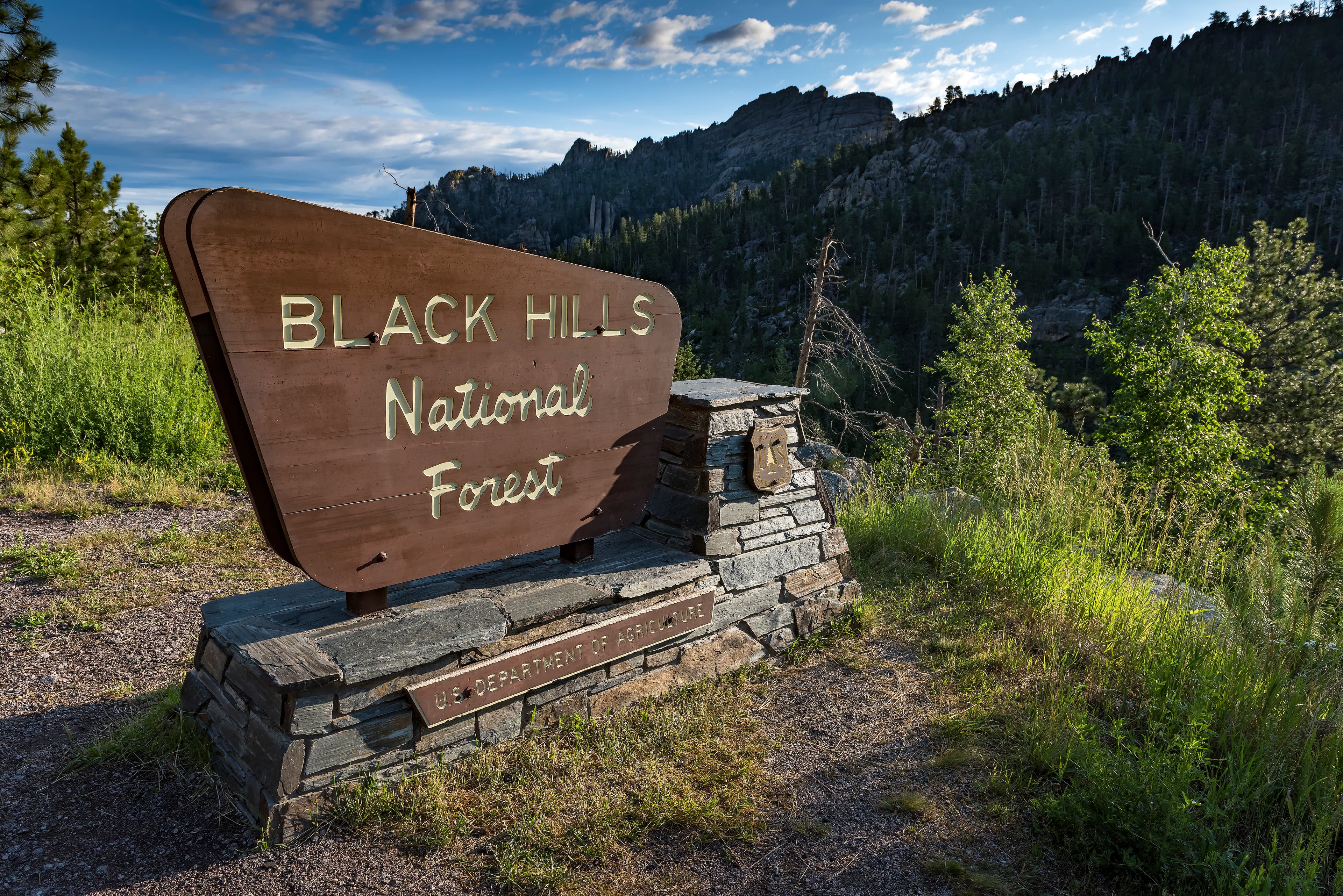
Rapid City / Black Hills · South Dakota
Rapid City / Black Hills
South Dakota · United States
Granite monuments, gold-rush streets and cave country across the Black Hills.
Rapid City serves as the gateway to a region built from granite carvings at Mount Rushmore and Crazy Horse, the wildlife and scenic drives of Custer State Park, the preserved gold-rush streets of Deadwood, the cave country of Wind Cave and the Mammoth Site, and the eroded buttes of Badlands National Park to the east.
DISCOVER RAPID CITY / BLACK HILLS
A gateway city opening onto granite monuments, gold-rush towns and cave country.
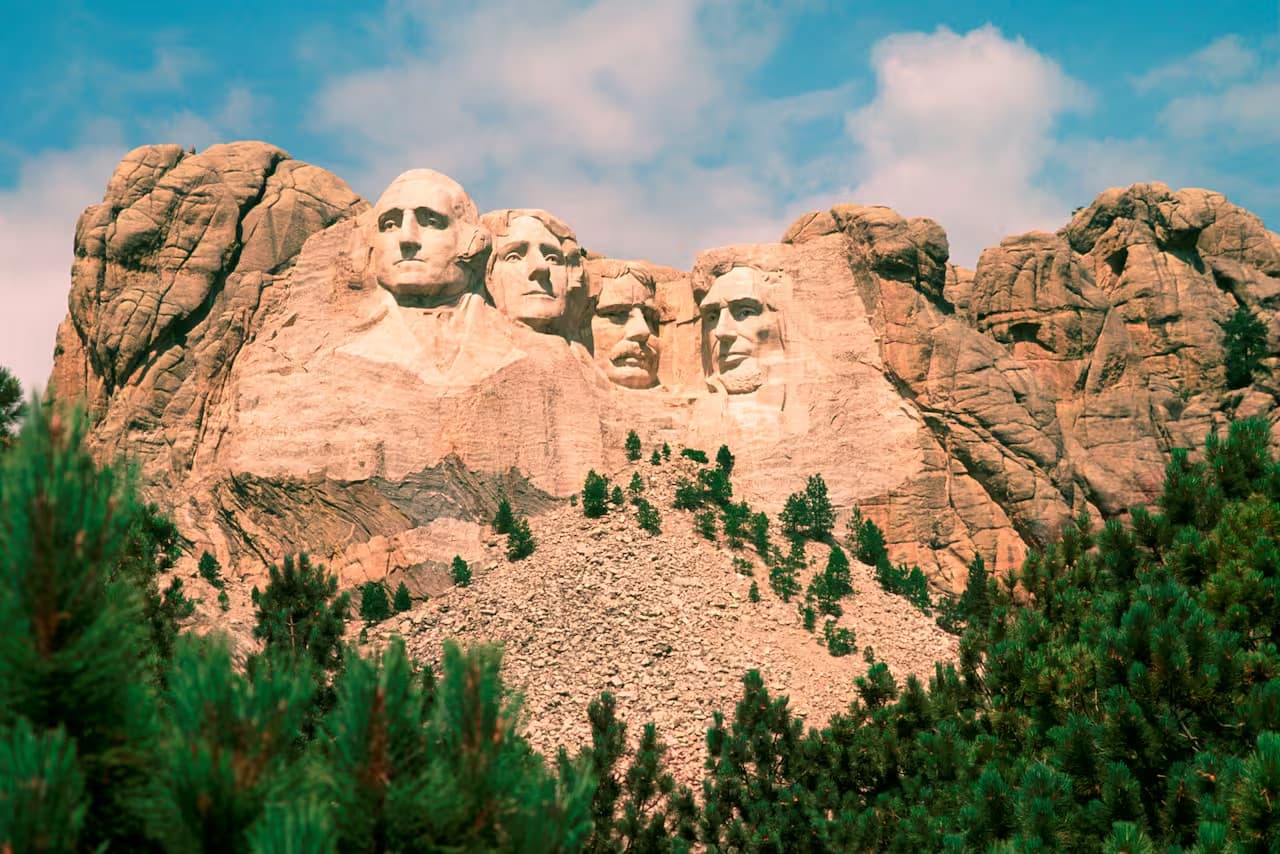
The region's best-known image is carved granite. Mount Rushmore National Memorial, near Keystone, presents its monumental carving of four presidents above the Avenue of Flags, with grounds open daily except Christmas Day. A short distance away near Custer, the Crazy Horse Memorial is a different kind of project entirely: a privately operated, still-unfinished mountain carving and cultural campus begun by sculptor Korczak Ziolkowski following an invitation from Lakota elder Henry Standing Bear. Its campus sits in unincorporated Crazy Horse, with Custer retained as the nearest canonical locality, and its interpretation reflects the memorial foundation's own account rather than a single consensus view among Lakota people or nations. Custer State Park surrounds both memorials with 71,000 acres of granite ridges, open grassland and lakes, connected by scenic roads where free-ranging bison can block traffic without warning; each September the park's Buffalo Roundup gathers the herd for its managed health programme, a working wildlife event rather than a spectator show. History runs through Deadwood to the north, where a nationally designated historic district preserves the steep-sided streets and buildings of the Black Hills gold-rush era, walkable even as its museums and tours keep separate hours. The Spearfish Canyon Scenic Byway carries the region's geography north, threading roughly 22 miles past high limestone walls and waterfalls along Spearfish Creek. To the south, Hot Springs holds two distinct underground stories: Wind Cave National Park protects an extensive cave known for rare boxwork formations beneath rolling mixed-grass prairie, while the Mammoth Site is an active indoor paleontological dig built over an Ice Age sinkhole, preserving mammoth remains in place. East of the Black Hills proper, Badlands National Park closes the region with a sharply eroded landscape of layered buttes, pinnacles and prairie, anchored near Interior and known for its own major fossil beds.
Granite Monuments And Cave Country
Black Hills · Badlands · Gold Rush History
The Black Hills hold two monumental carvings, a working gold-rush town and two very different worlds underground.
Mount Rushmore and the Crazy Horse Memorial anchor the region's granite identity; Custer State Park's wildlife and scenic drives, Deadwood's preserved gold-rush streets and the Spearfish Canyon byway extend it; Wind Cave and the Mammoth Site hold contrasting underground records in the south; and Badlands National Park, east of the Black Hills proper, adds its own eroded, fossil-bearing landscape.
Journey Possibility
Base in Rapid City and work outward: Mount Rushmore and the Crazy Horse Memorial near Keystone and Custer, Custer State Park's scenic drives between them, historic Deadwood and the Spearfish Canyon byway to the north, Wind Cave and the Mammoth Site in Hot Springs to the south, and Badlands National Park as a separate excursion east of the hills.