
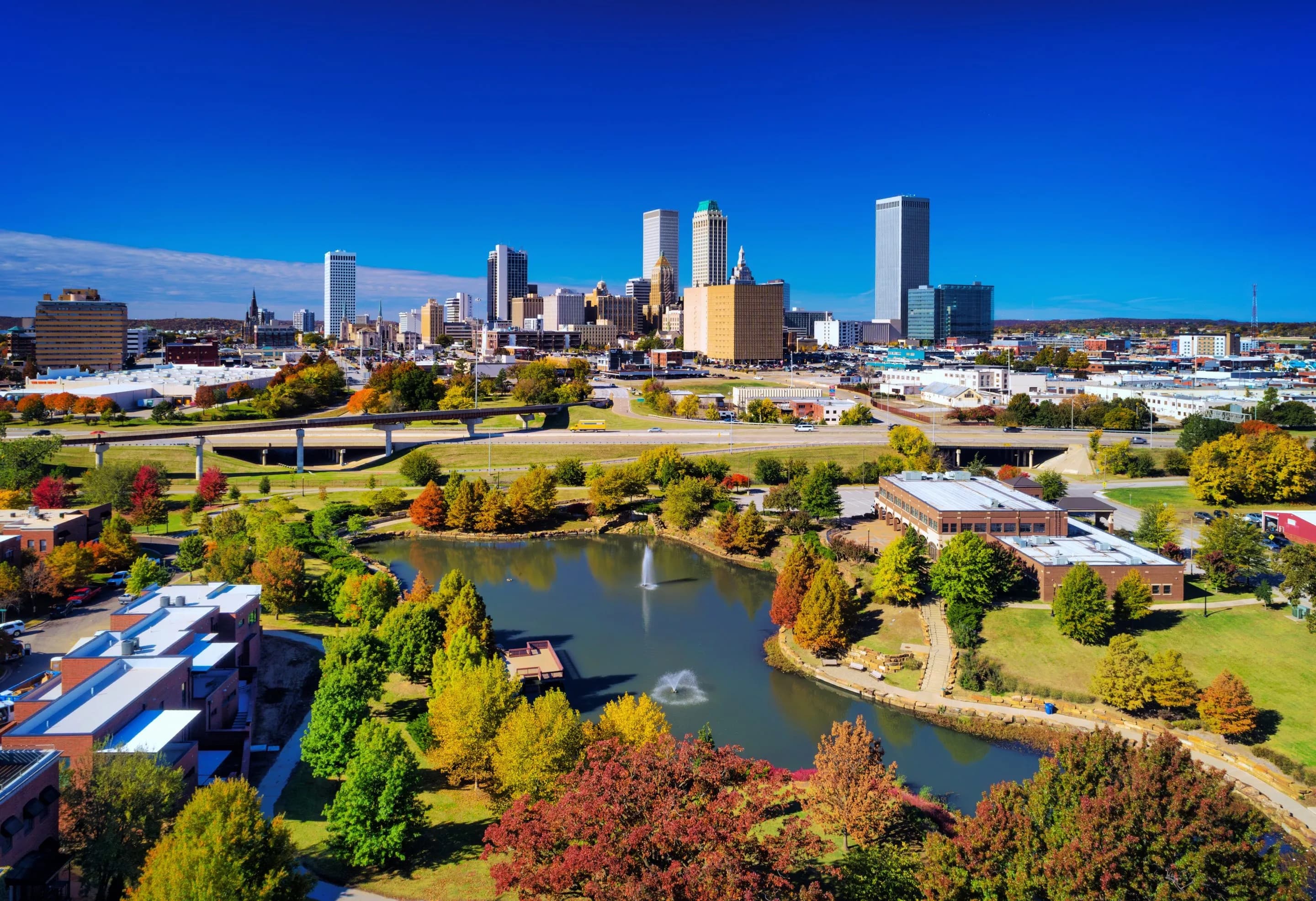
Tulsa · Oklahoma
Tulsa
Oklahoma · United States
Route 66, Art Deco and American music converge in a city with a deeper history to tell.
Tulsa connects the Mother Road and oil-era architecture with the history of Greenwood, major music archives, active performance spaces and cultural institutions that continue to shape the city beyond nostalgia.
DISCOVER TULSA
A city of road history, architectural ambition and living cultural memory.
Tulsa’s Route 66 story begins at the Arkansas River. Cyrus Avery Centennial Plaza stands beside the historic bridge associated with the road’s formation, while the restored Meadow Gold sign preserves the neon vocabulary of its urban corridor. Those landmarks introduce a city whose identity reaches well beyond the highway. Boston Avenue United Methodist Church is both an active place of worship and a nationally significant Art Deco landmark. Philbrook Museum of Art carries another expression of Tulsa’s oil-era ambition through an Italian Renaissance Revival villa, formal gardens and broad collections. In the Greenwood District, Greenwood Rising examines Black Wall Street, the 1921 race massacre and the community’s continuing resilience—history that is fundamental to understanding Tulsa rather than a separate footnote. Music provides another connected line through the destination. The Woody Guthrie Center and Bob Dylan Center place archives, songwriting and cultural influence side by side; Cain’s Ballroom preserves its association with Western swing while remaining an active concert hall; and the Church Studio traces the Tulsa Sound inside a working recording facility established by Leon Russell. Saint Francis Tulsa Tough briefly turns downtown streets and River Parks into a cycling festival each June, but the evergreen city is found in this combination of road, architecture, historical memory and creative work.
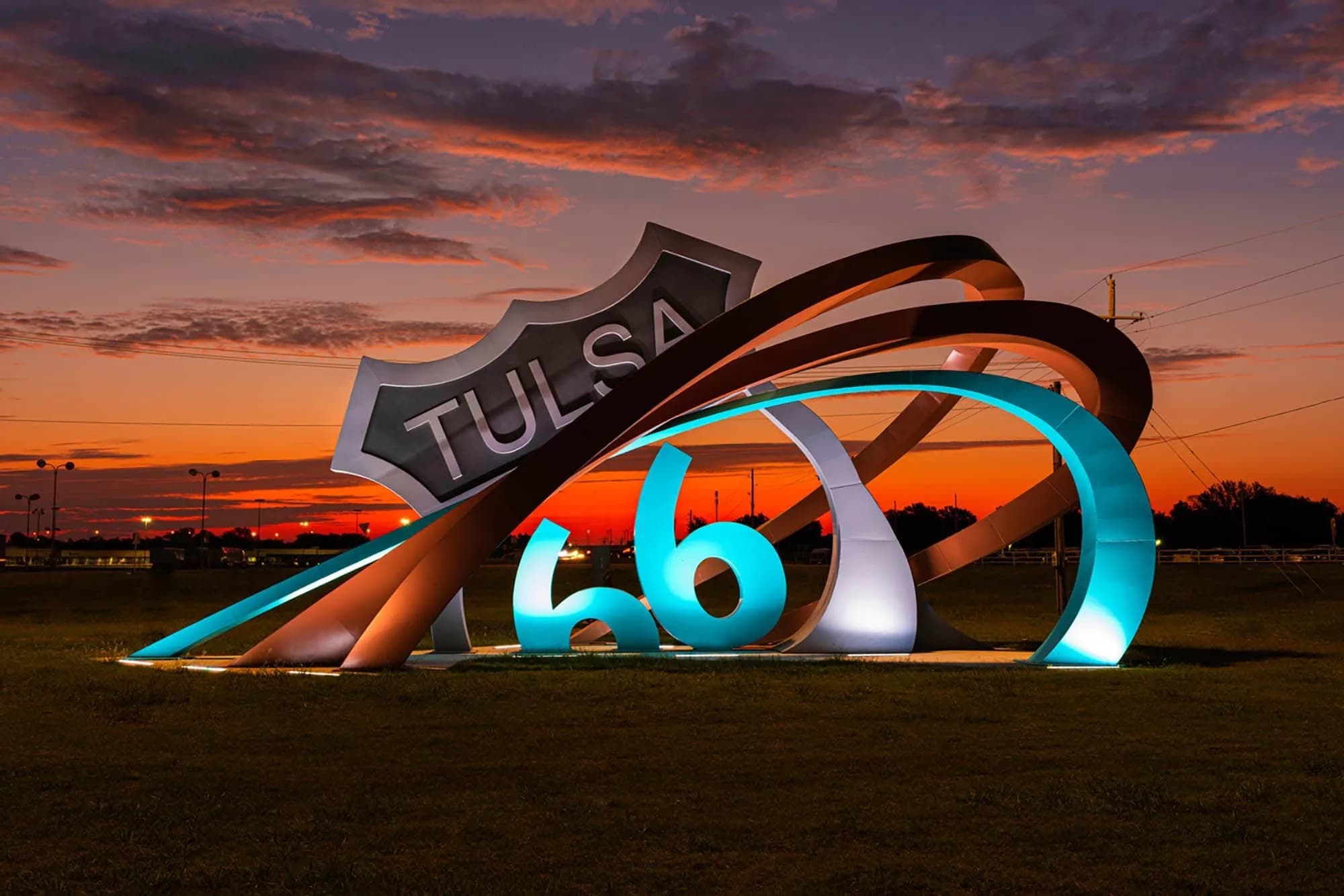
Road, Architecture And Living Memory
Route 66 · Art Deco · Music
Tulsa becomes clear where movement, civic ambition, historical memory and creative work intersect.
Cyrus Avery Plaza and the Meadow Gold sign establish the Route 66 story; Boston Avenue and Philbrook express the city’s architectural confidence; Greenwood Rising holds an essential historical line; and the Guthrie, Dylan, Cain’s and Church Studio institutions connect archival depth to a music culture that remains active.
Journey Possibility
Begin with Greenwood Rising and the nearby music archives, connect downtown to Cain’s Ballroom, then follow a separate line through Boston Avenue, Philbrook and the Route 66 landmarks at the Arkansas River and along 11th Street.