
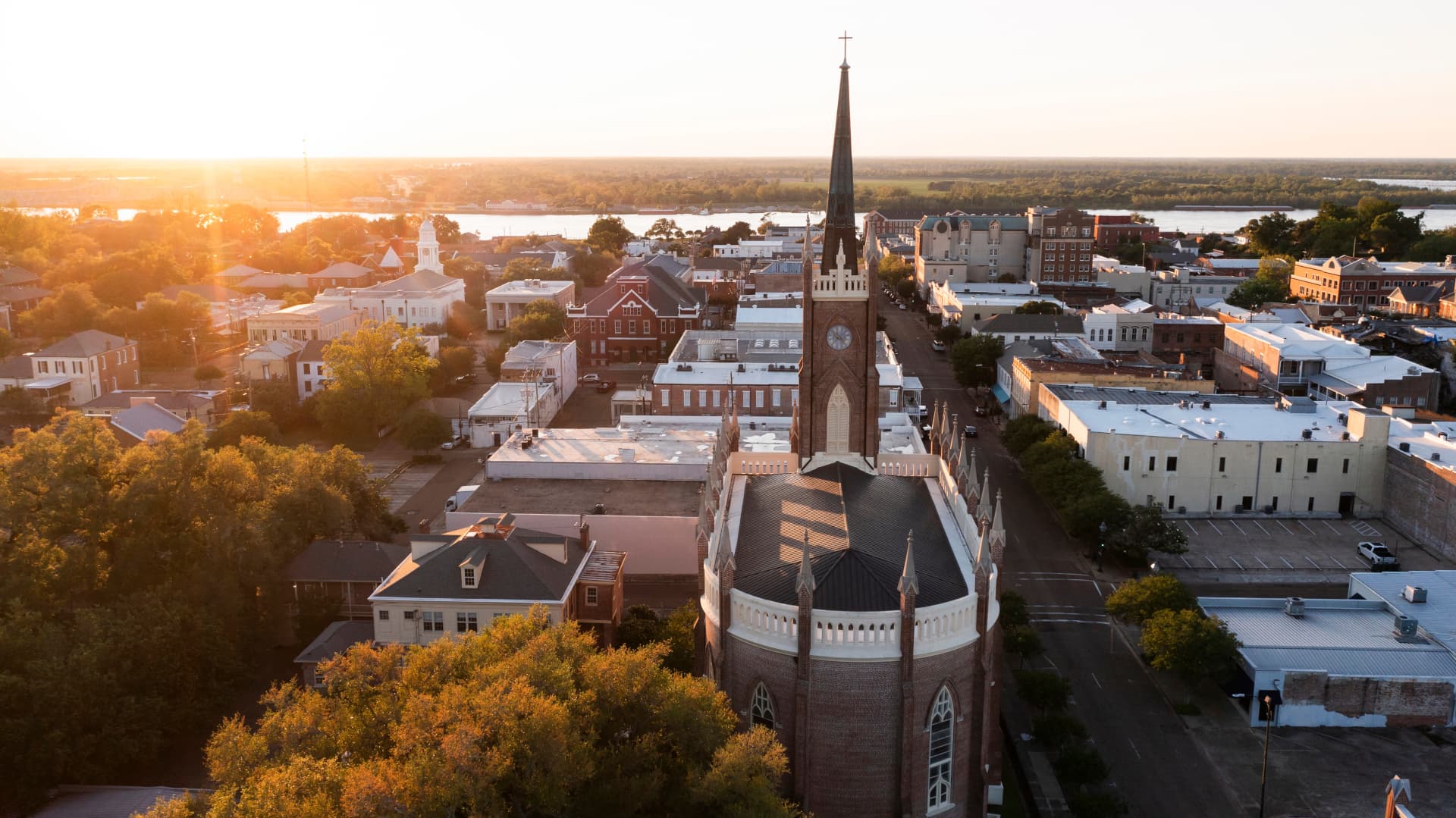
Natchez · Mississippi
Natchez
Mississippi · United States
A Mississippi River city where Indigenous, African American, architectural and road histories remain visible in the landscape.
Natchez brings together its river bluffs, the southern end of the Natchez Trace, the history of the Natchez people and a built heritage that must be understood alongside slavery, resistance and Black community life.
DISCOVER NATCHEZ
The river view is only the beginning of a much longer and more complex story.
Natchez occupies a high bluff above the Mississippi, with Under-the-Hill preserving the physical relationship between the city and its historic landing. Yet the destination’s chronology begins long before its familiar architecture. Grand Village preserves the principal historic center of the Natchez people, while nearby Emerald Mound was built by their ancestors and remains part of the archaeological landscape along the southern Natchez Trace. The city’s antebellum fabric requires equally direct interpretation. Forks of the Road marks one of the South’s largest markets in enslaved people. Melrose Estate and Longwood reveal planter wealth and architectural ambition, but neither can be understood apart from the enslaved labor and plantation economy behind them. The William Johnson House presents the life and records of a free Black barber and diarist whose own story contains the contradictions of antebellum Natchez. The Natchez Museum of African American History and Culture follows Black life through enslavement, civil rights, culture and achievement, while the Rhythm Night Club Memorial Museum remembers the 1940 fire and the community it transformed. Milepost 0 then places Natchez within a wider road journey north: Emerald Mound and Mount Locust extend the story along the parkway, with Windsor Ruins a separate Port Gibson-area excursion rather than a Natchez city site. The Spring Pilgrimage and Balloon Festival add seasonal reasons to travel, but the destination’s lasting value lies in reading river, landscape, architecture and memory together.
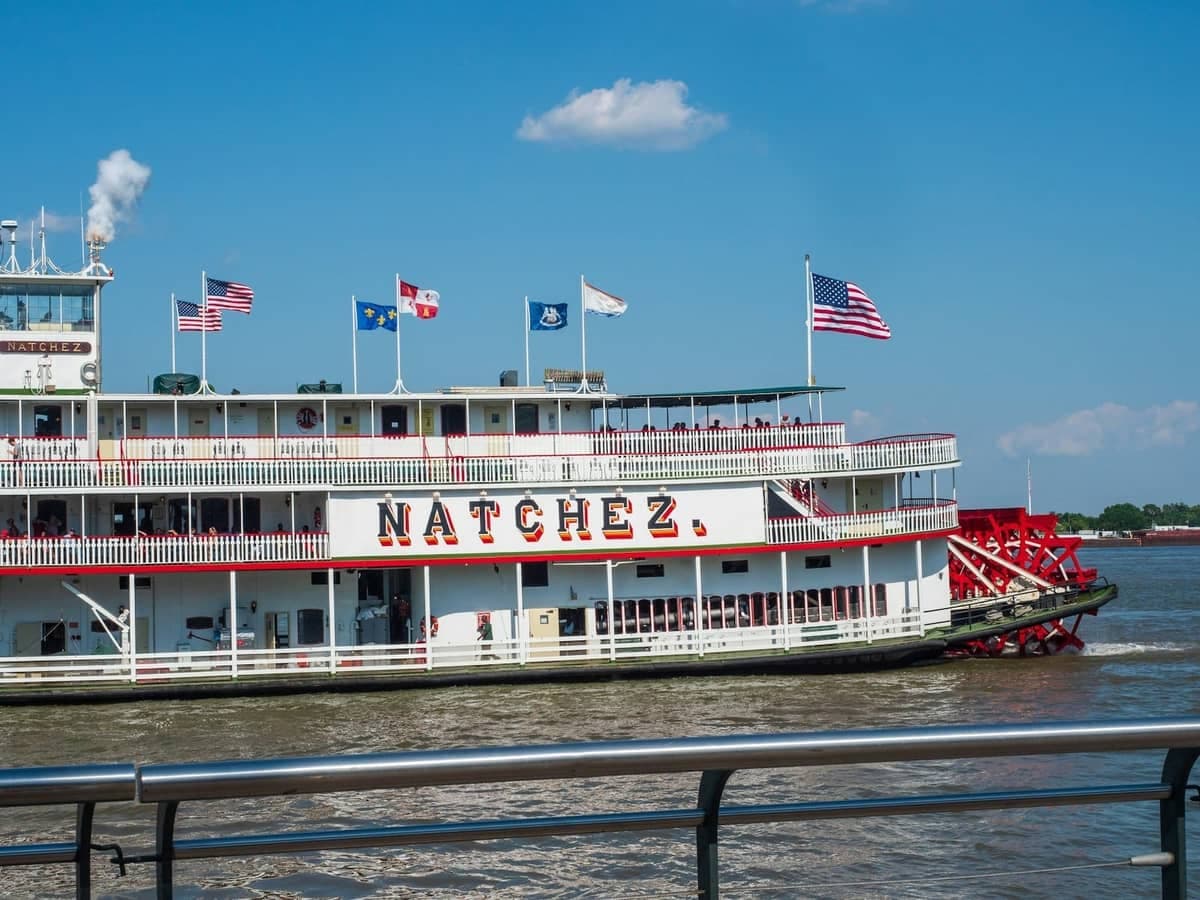
River, Memory And Built Landscape
Mississippi · Indigenous History · Natchez Trace
Natchez rewards travellers who look beyond the river panorama and read its different histories together.
Grand Village and Emerald Mound establish a history rooted in the Natchez people; Forks of the Road, the William Johnson House, the African American history museum and the Rhythm Night Club memorial restore lives and events too often excluded from the city’s architectural image; and the bluffs, historic properties and Natchez Trace place those stories within a wider landscape.
Journey Possibility
Begin at the bluffs and Under-the-Hill, then pair Grand Village with focused visits to Forks of the Road, the William Johnson House or the African American history museum. Approach Melrose or Longwood through their complete labor history, and reserve a separate road-trip segment for Emerald Mound, Mount Locust and any Port Gibson extension.